
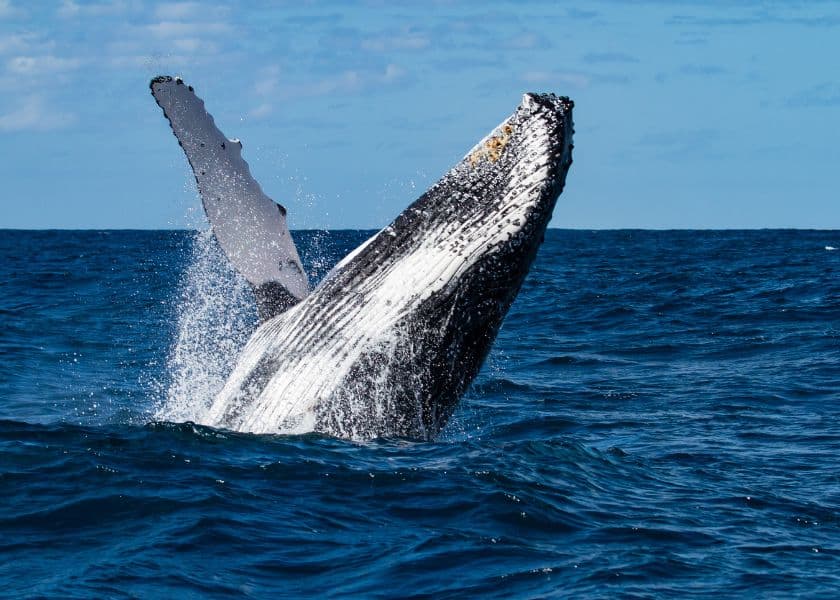
Humpback whale season fills the Pacific waters off Montezuma with new mothers, curious calves, and some of the most striking wildlife encounters in Costa Rica. Thousands of humpback whales migrate every year to reach these warm coastal waters. Watching one breach already feels like a moment you only experience once in a lifetime, and it gets even better once you know why they travel so far to get here.
This stretch of the Nicoya Peninsula turns into a front-row seat for one of nature's longest journeys.
Why Do Humpback Whales Come to Costa Rica?
Unlike species that migrate chasing food, humpback whales travel to Costa Rica to reproduce. Every year, whales leave colder waters in both hemispheres and swim thousands of miles toward the Pacific coast. These calmer, warmer waters give mothers a safe place to give birth and raise newborn calves. Away from the cold currents and predators common farther north or south, calves gain strength quickly here.
This calm nursery period is a major reason Costa Rica remains one of the few places that offer whale watching for most of the year. Few coastlines in the world can claim two separate whale nurseries in the same stretch of water.
Two Migrations, One Remarkable Coastline
One of the most unusual parts of Costa Rica's humpback whale season is that two separate populations pass through the same waters. Whales from the Northern Hemisphere typically arrive between December and April.
Then you have Southern Hemisphere whales, which usually pass through from July through October, often in larger numbers. Visiting Montezuma during that window puts you right in the middle of the southern migration. Guests tend to build their entire itineraries around it, pairing a guided whale watching tour with beach days and sunset dinners.
Mothers and Calves: The Quiet Side of the Season
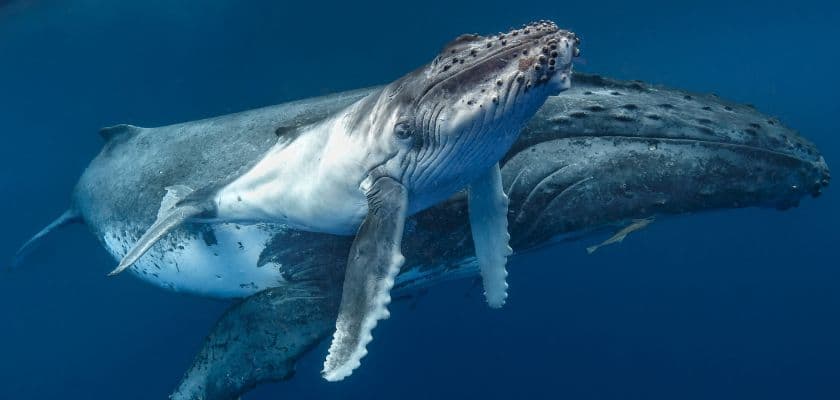
Breaching whales get most of the attention, but the real magic happens quietly. Many of the whales you'll spot are mothers traveling with newborn calves. During these early weeks, calves learn to breathe efficiently, communicate, and build the stamina needed for one of the longest migrations on Earth.
Some encounters bring playful tail slaps and curious young whales surfacing beside their mothers. Others amount to a slow rise, a deep breath, and a graceful return beneath the waves. A calf might stay within arm's reach of its mother for weeks, never straying far as it builds strength.
No two mornings on the water look the same, and that's exactly the point. Guests tend to tell us calm stillness between sightings sticks with them just as much as the breaches do.
Whale Watching From Montezuma
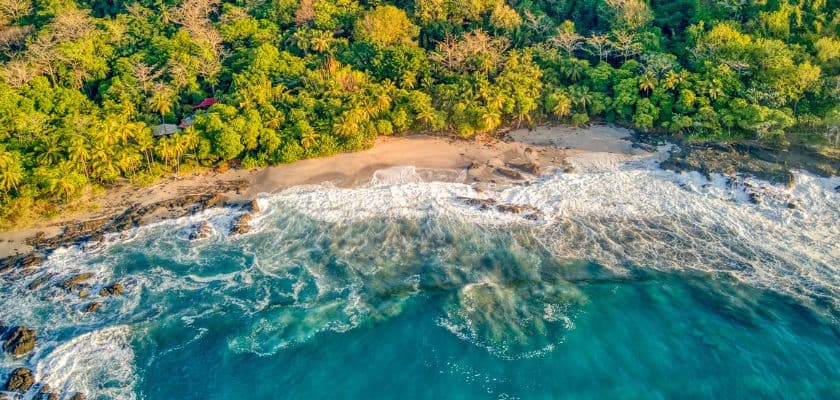
Montezuma's spot on the Nicoya Peninsula makes it an easy home base for excursions during humpback whale season. Local captains lead most trips and have the experience tracking whale behavior along this coastline down to a science. Sightings depend on the day itself.
Some mornings you’ll see dramatic breaches close to the boat — other days you’ll experience a quieter payoff. But the joy lies in watching a mother and calf move together through open water. Doesn’t matter what you experience; you’ll witness wildlife on its own schedule, not a performance staged for visitors.
More Than Whales
Whales are rarely the only wildlife you'll spot from the boat. Depending on the day, you might also catch sight of:
Dolphins riding alongside the boat's wake.
Sea turtles surfacing for air.
Flying fish skimming across the water.
Frigatebirds and pelicans circling overhead.
Other seasonal marine life is unique to this stretch of coast.
Every trip becomes a small tour of the Pacific's broader ecosystem, including whales. Bring binoculars, and don't be surprised if the boat goes quiet for a while as everyone watches the water.
Responsible Whale Watching
Costa Rica's ongoing commitment to marine conservation is part of what makes this experience so meaningful. According to the International Whaling Commission, as many as 34 species of whales and dolphins have been recorded in Costa Rican waters, and commercial whale watching here has grown steadily since the early 1990s.
Licensed operators follow guidelines built to limit disturbance to whales and their calves. As a visitor, you can do your part too. Choose licensed boats, keep a respectful distance, skip loud noises near the animals, and follow your captain's lead at all times.
None of this restricts the experience; it protects it. Small choices, like staying quiet and patient near a resting mother and calf, add to a healthier migration season.
Plan Your Humpback Whale Season Getaway
Humpback whale season gives you a reason to visit Montezuma that goes well beyond the beach chair. Ylang Ylang Beach Resort sits on a quiet stretch of sand, a short distance from the same waters where whales pass through each morning during the season.
Between excursions, guests spend their days at our freshwater pool, on a mat in our open-air yoga studio, or at a table overlooking the Pacific at Ylang Ylang Restaurant and Bar.
We've held a Tripadvisor Certificate of Excellence for more than a dozen years running, and travelers still tell us it's one of the most scenic corners of Costa Rica they've found.
Book your room at Ylang Ylang Beach Resort before this year's best weeks fill up, and let Montezuma handle the rest.
Photo Credit: © IainStych via canva.com, © John Natoli via canva.com